
You’ve noticed your teeth look darker in photos than they used to. Maybe it’s the morning coffee, maybe it’s just time. You’ve seen whitening strips at the supermarket, kits online and in-chair whitening at the dentist, and you’re not sure which is sensible, whether it will hurt, or whether whitening is even the right fix for your kind of staining.
Here’s the short answer. The Australian Dental Association (ADA) says there are many reasons why teeth may be discoloured, and dental practitioners are best placed to diagnose the reason and advise on whether tooth whitening will be an effective treatment. It also lists sensitive teeth and chemical burns to the gums among the risks. West Perth Dental Centre offers in-chair and take-home whitening, and the clinic says decay or gum problems should be treated first.
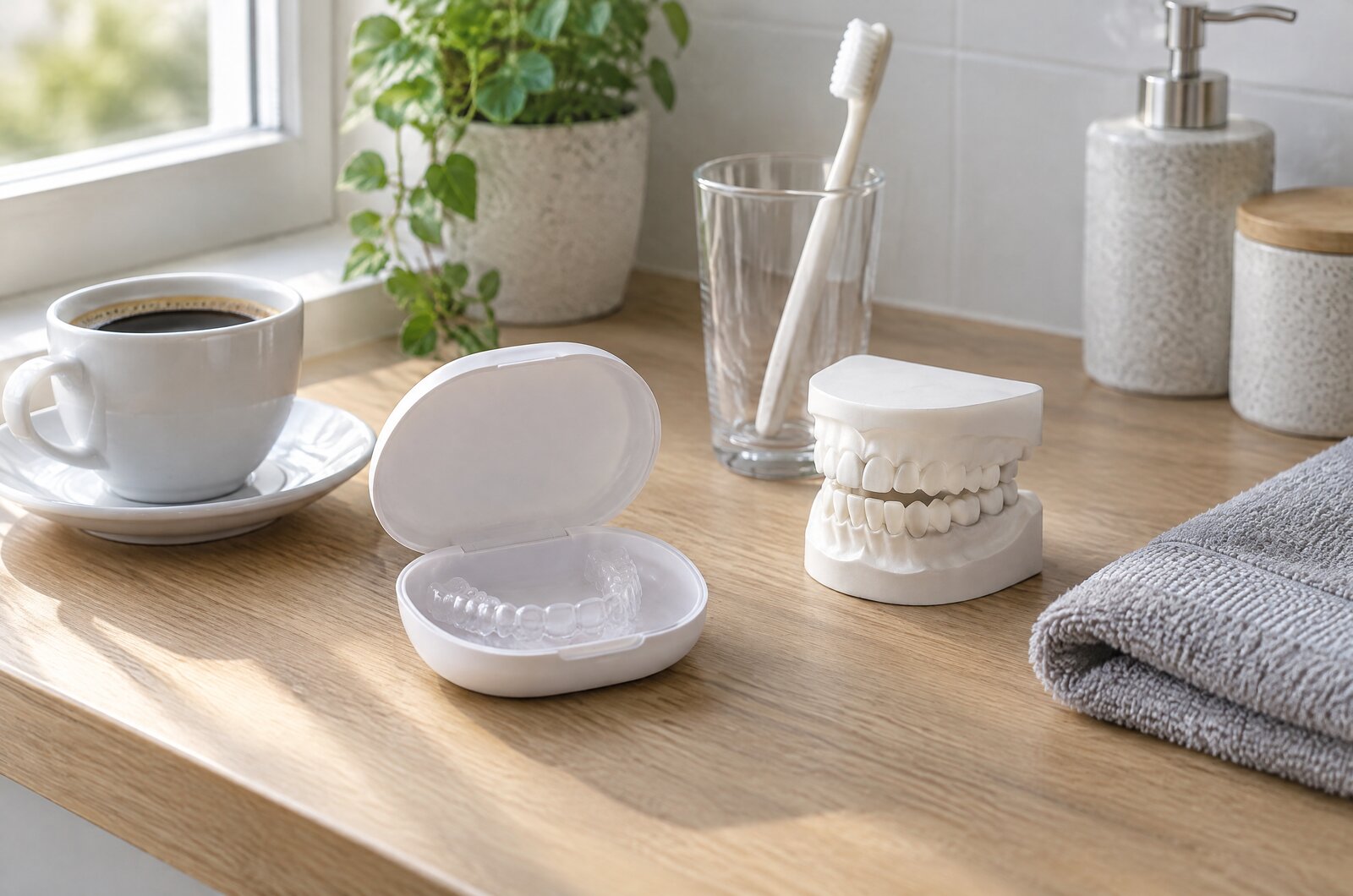
Top image: AI-generated illustration.
Summary of the Content
- Not all staining is the same. Stains on the outside of teeth behave differently from stains inside a tooth.
- Some outside stains can be reduced with a professional clean or whitening toothpaste, before you think about whitening.
- Whitening gel only lightens natural tooth enamel. It won’t change the colour of crowns, veneers or white fillings.
- Tooth sensitivity is a known side effect, and gel touching the gums can cause chemical burns.
- The ADA says whitening isn’t recommended during pregnancy or breastfeeding.
Why Do Teeth Change Colour?
The ADA lists several common causes of tooth staining:
- Food and drinks. Coffee, tea and red wine are major causes of staining. Their intense colour pigments attach to the white tooth enamel, making it look darker.
- Tobacco. The tar and nicotine in tobacco can cause teeth to become a yellowish colour.
- Getting older. As you get older, the white enamel layer can become thinner, letting the dentine inside show through and make the tooth look darker.
- Medicines. Some medicines can cause staining, including certain antibiotics taken while adult teeth are developing.
- Injury. An injured tooth can become darker over time.
Outside stains and inside stains
The ADA separates staining into two kinds:
| Type of stain | What the ADA says |
|---|---|
| Outside the tooth (extrinsic) | Can be caused by tea, coffee, red wine and smoking. You might be able to remove it by brushing with a whitening toothpaste, or with a professional dental cleaning or teeth whitening treatment |
| Inside the tooth (intrinsic) | Might be caused by medicines taken during tooth development, trauma, amalgam fillings or root canal treatment. Very difficult to remove by treating the outside of the tooth; sometimes treating the tooth from the inside (internal bleaching) is an option |
This is why a check comes first. If your staining is on the surface, a clean might be all you need. If it’s inside one tooth, whitening the outside of all your teeth may not change it.
What Are the Whitening Options?
The ADA describes two main ways a dentist can whiten teeth, plus whitening toothpaste at home.
In-chair whitening
The ADA says in-chair whitening is done for you in the dental clinic. It uses strong hydrogen peroxide gel, and often a light is placed over the teeth. You may be recommended to use take-home whitening afterwards.
West Perth Dental Centre’s page says a professional in-chair whitening procedure takes about one hour, and that depending on how much lightening is needed, it may take several sessions.
Take-home whitening
The ADA says take-home whitening is done at home by you, under the supervision of your dentist, using custom-made thin plastic trays that only fit your teeth. Your dentist will tell you how to put the gel in the trays, how much to use, how long to wear the trays each day and how many weeks to do the treatment. It takes longer than in-chair whitening, but the ADA says this does not mean the final result is better or worse.
West Perth Dental Centre’s take-home kits include custom-fitted trays and whitening gel. The clinic notes that many take-home treatments contain lower concentrations of bleaching agents.
Whitening toothpaste
The ADA says whitening toothpastes help reduce stains on the outside surfaces of your teeth, but don’t tend to make a large difference to the colour of the teeth.
What Are the Risks?
The ADA is direct about two risks.
Chemical burns. If strong hydrogen peroxide gel touches the lips, gums or tongue, it can cause chemical burns, which will often turn into ulcers before they heal.
Sensitive teeth. Whitening can make teeth sensitive to cold, and the ADA says this can sometimes be very severe, to the point that breathing air can be painful. Your teeth can also become sensitive when using whitening toothpastes. Before you begin, your dentist will give you advice about how to prevent or treat sensitivity.
West Perth Dental Centre’s page says whitening treatments may lead to temporary tooth sensitivity or gum irritation, and to discuss any concerns with your dentist. If you already have sensitive teeth or allergies, the clinic asks you to raise this with the team before starting.
If you already have sensitive teeth
The ADA says you should see a dentist if a tooth is sensitive to cold, hot or sweet foods or drinks, because it may be a sign of tooth decay or tooth erosion. It’s worth finding the cause of the sensitivity before adding whitening on top.
Who Should Wait or Skip Whitening?
Some situations call for a pause or a different approach:
- Decay or gum disease. West Perth Dental Centre says that having decay or gum disease may make bleaching painful, and that dental issues should be addressed first. Its take-home page notes whitening solution may seep into a cavity or inflamed gum pockets, causing irritation and sensitivity.
- Crowns, veneers and white fillings. The ADA says whitening gel only lightens tooth enamel and will not change the colour of porcelain crowns, veneers or composite resin (white) fillings. If they end up a different colour from your teeth, your dentist might need to replace them, so they’ll discuss this with you first.
- Pregnancy and breastfeeding. The ADA says whitening is not recommended for women who are pregnant or breastfeeding. There isn’t evidence it’s dangerous, but there also isn’t evidence it’s safe, so it’s best avoided.
- A single dark tooth after an injury or root canal. The ADA says this is an example of when a tooth can be treated from the inside. West Perth Dental Centre lists internal teeth whitening among its services.
What About DIY Whitening?
The ADA says DIY whitening kits can be bought online and in supermarkets and pharmacies, but there are risks to using them, and it advises having whitening done under the supervision of a dentist.
It also covers the baking soda trend. Baking soda is mildly abrasive and can help with light stains on the outside of teeth, but it won’t change the colour inside the tooth, and the ADA doesn’t recommend it as part of your daily brushing. Toothpastes containing baking soda are a better option than home-made pastes, and your toothpaste should include fluoride.
Your Before-Whitening Checklist
Bring these to your appointment:
- What bothers you: overall colour, one dark tooth, or patchy stains.
- How much coffee, tea or red wine you drink, and whether you smoke.
- Any crowns, veneers or white fillings on the teeth you’d see when you smile.
- Whether any teeth are sensitive to hot, cold or sweet things now.
- Whether you’re pregnant, planning a pregnancy or breastfeeding.
- Any whitening products you’ve already tried.
- Questions to ask: Is my staining on the outside or inside? Would a clean help first? Which option suits me, and what should I do if my teeth get sensitive?
Booking at West Perth Dental Centre
West Perth Dental Centre is at 39 Colin Street, West Perth WA 6005. It’s open Monday to Friday from 8:00 AM to 8:00 PM (by appointment only) and Saturday from 8:00 AM to 1:00 PM. Payment options include HBF and NIB, HICAPS claiming, Afterpay, Zip, Humm and SuperCare.
Call 08 9321 6928 or book online. If you’re not sure what to say, try: “I’m thinking about teeth whitening. Can I book a check-up first to see if it would suit me?”
You can read about the clinic’s in-chair whitening and take-home whitening kits on its service pages.
Frequently Asked Questions
Does teeth whitening hurt?
Some people get sensitive teeth. The ADA says it can sometimes be severe, and the clinic describes it as usually temporary. Your dentist will give you advice on preventing or treating sensitivity before you start.
Will whitening change my veneers or crowns?
No. The ADA says whitening gel will not change the colour of porcelain crowns, veneers or white fillings.
Can a scale and clean remove stains?
It can help with some stains. The ADA says stains on the outside of teeth from tea, coffee, red wine and smoking might be removed with a professional dental cleaning.
Final Thoughts
Whitening can lighten natural tooth enamel, but it isn’t the answer to every kind of discolouration, and it comes with real risks like sensitivity and gum irritation. Start with a check: your dentist can tell you whether your staining is on the outside or inside, whether a clean might help, and whether in-chair or take-home whitening suits your teeth, your fillings and your stage of life.
Written by Dr. Michael Wu, West Perth Dental Centre.
Sources
Checked 30 October 2026. This article explains general published guidance and the clinic’s own published information, not advice about your teeth.
- Australian Dental Association: Teeth whitening, Teeth staining and Sensitive teeth.
- West Perth Dental Centre: Teeth whitening, In-chair whitening, Take-home whitening kits, Internal teeth whitening, Payment options, Dr. Michael Wu and Contact us.
- Photos in this article are AI-generated illustrations, not photos of West Perth Dental Centre, its staff or patients.


 General Dentistry
 Cosmetic Dentistry
 Emergency Dentist
 Dental Implants
 Orthodontics
 Restorative Dentistry
 Trademarked Treatment
 Digital Dentistry