
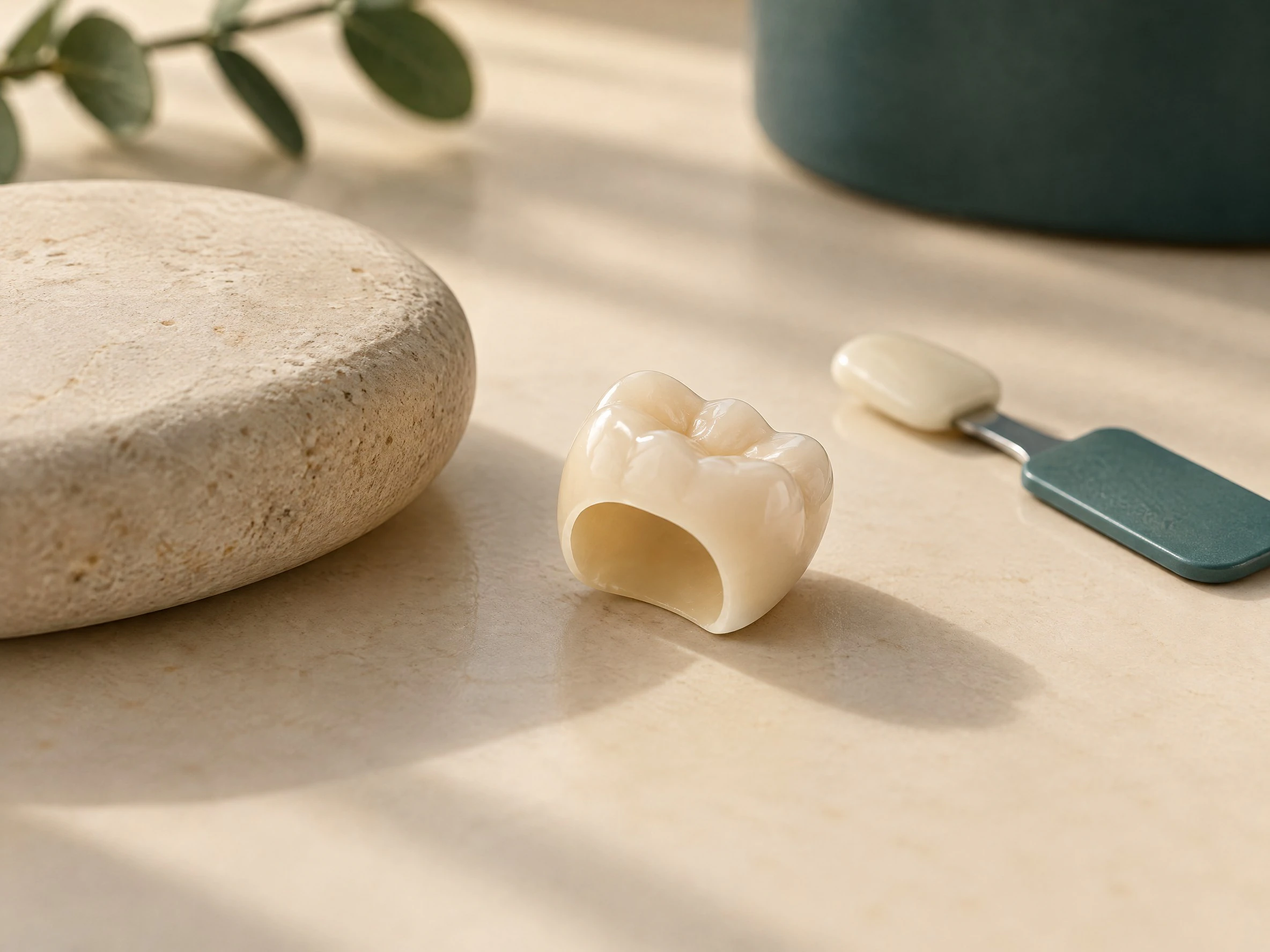
You have a tooth with a large filling, and your dentist has mentioned a crown. The useful question is not simply which costs less or takes fewer visits. It is why this tooth needs a different kind of support. A crown is not automatic: at West Perth Dental Centre, assessment may lead to another filling, an onlay, a crown or a different option.
The decision starts with the tooth, gums, bite, symptoms and how much natural tooth structure remains. Our crown assessment pathway looks at these findings before a restoration is recommended. This guide explains what to ask when a large or failing filling brings a crown into the discussion.
Summary of the Content
A large filling does not, by itself, establish that you need a crown. Ask what the examination has found, what other options are suitable and what each option involves. A digital same-day workflow is available for selected crown cases, but suitability comes before the appointment format.
Why might a crown be discussed instead of another filling?
A heavily filled tooth can develop cracks or weaken around its remaining structure. Our MiCrown information lists large or failing fillings among the reasons for a crown assessment. The dentist considers whether another filling, an onlay or a crown is appropriate rather than choosing from the size of the old filling alone.
A filling replaces the damaged or decayed part of a tooth with restorative material. A crown is a custom-made cover over an existing tooth. They are different forms of restoration; the amount of tooth remaining and its condition help determine which options can be considered.
Ask your dentist to explain the reason for the recommendation in terms of your tooth: what structure remains, whether there are cracks, and how your bite affects the plan. These are part of the assessment described in our crown pathway.
What does the dentist check before recommending a crown?
At West Perth Dental Centre, the Diagnose stage considers the remaining tooth structure, symptoms, crack pattern, decay risk, gum support, previous dental treatment and bite pressure. Existing restorations and possible alternatives are considered as well.
The assessment can include radiographs or other records where clinically indicated. Ask what the records show and which finding makes a filling, onlay or crown worth considering. You do not need to arrive having chosen a restoration yourself.
If you have been told that an old filling is failing, ask what that means in your case. Our fillings page notes that loose or broken fillings and decay around them can be reasons for replacement. The treatment decision still requires an examination.
Is another filling or an onlay still an option?
It may be. Our crown pathway specifically includes another filling, an onlay or a crown as possible options for a heavily filled tooth. For a cracked or broken tooth, the options can also include monitoring, root canal treatment or extraction, depending on the findings.
Ask which alternatives are suitable, which are not, and why. A crown is not the default for every damaged tooth, and a list of options online cannot establish whether your tooth can be restored in a particular way.
If root canal treatment is also being discussed, ask how that changes the restorative plan. Some root canal treated teeth need coverage or a crown, while others may be managed differently according to the remaining structure, bite pressure and clinical risk. Our guide to planning crown visits after root canal treatment explains that separate appointment question.
If I need a crown, does it have to be a same-day one?
No. Selected single-tooth cases may suit digital scanning, in-house design, fabrication and placement in one appointment. Other teeth need staged planning, temporary restorations, laboratory work or further review. Your dentist assesses the tooth, bite, gums, symptoms and restorative requirements before confirming the workflow.
The Design and Detail stages of our crown pathway consider the restoration shape, material needs, neighbouring teeth, contacts, bite and cleaning access. At fitting, the dentist checks seating, contacts, comfort, appearance and cleanability.
Ask whether your plan is for a same-day crown or staged treatment, and what each appointment is for. Our same-day and lab-made crown guide describes the two appointment formats in more detail.
What risks and future care should I discuss?
A crown involves removing some natural tooth structure during preparation. Possible limitations include sensitivity, discomfort, a changed bite, loosening, chipping or fracture, decay or gum concerns around the crown edge, and the need for later repair or replacement. The tooth may later need root canal treatment.
Fillings have limitations too. Our fillings information lists sensitivity, infection and an allergic reaction to the material among the possible risks. Ask about the risks of each option that is suitable for your tooth, not only the crown.
A crown still depends on the supporting tooth and gums. Your dental team will advise on cleaning and review appointments. A night guard or splint may be discussed if there are signs of grinding, clenching or repeated fractures; it is not required for everyone.
Tell your dentist if a crown becomes loose, high in the bite, sensitive, uncomfortable, difficult to clean or starts trapping food. These are reasons for review, not a way to decide at home that replacement is necessary.
What should I ask for in my treatment plan?
Ask for an itemised plan after assessment. Our crown information explains that fees depend on the tooth or area, restoration type, material, complexity, technology and any additional treatment required. A general online comparison cannot give you the total for your tooth.
Useful questions include: What is the problem with the existing filling? How much tooth remains? Which alternatives are suitable? What tooth preparation is needed? What risks and future maintenance should I expect? Will treatment be same-day or staged, and what is included in the itemised fee?
Discussing your tooth at West Perth Dental Centre
You can ask for an assessment without deciding in advance that you want a crown. Our MiCrown pathway begins with diagnosis and discussion of alternatives. It then covers design, fitting and ongoing care if a crown is recommended.
West Perth Dental Centre is at 39 Colin Street, West Perth WA 6005. Contact the team on (08) 9321 6928 to discuss an appointment, or use our contact page. Tell the team that you would like to discuss a large or failing filling and the proposed restoration.
Sources
Sources checked 11 November 2026. This article is general education, not a diagnosis or a recommendation for an individual tooth. Suitability, risks, alternatives and fees need assessment.


 General Dentistry
 Cosmetic Dentistry
 Emergency Dentist
 Dental Implants
 Orthodontics
 Restorative Dentistry
 Trademarked Treatment
 Digital Dentistry