
Your new crown looks fine, but closing your teeth feels different. Perhaps that tooth seems to touch first, or chewing sends an uncomfortable jolt through it. You don’t need to decide whether the crown is too high before asking for help.
If a new crown feels high or hurts when you bite, contact your dentist for a fit and bite assessment. West Perth Dental Centre’s published crown guide describes checking for high spots and making adjustments where needed. The Victorian Government’s Better Health Channel recommends seeing an oral health professional for mouth pain.
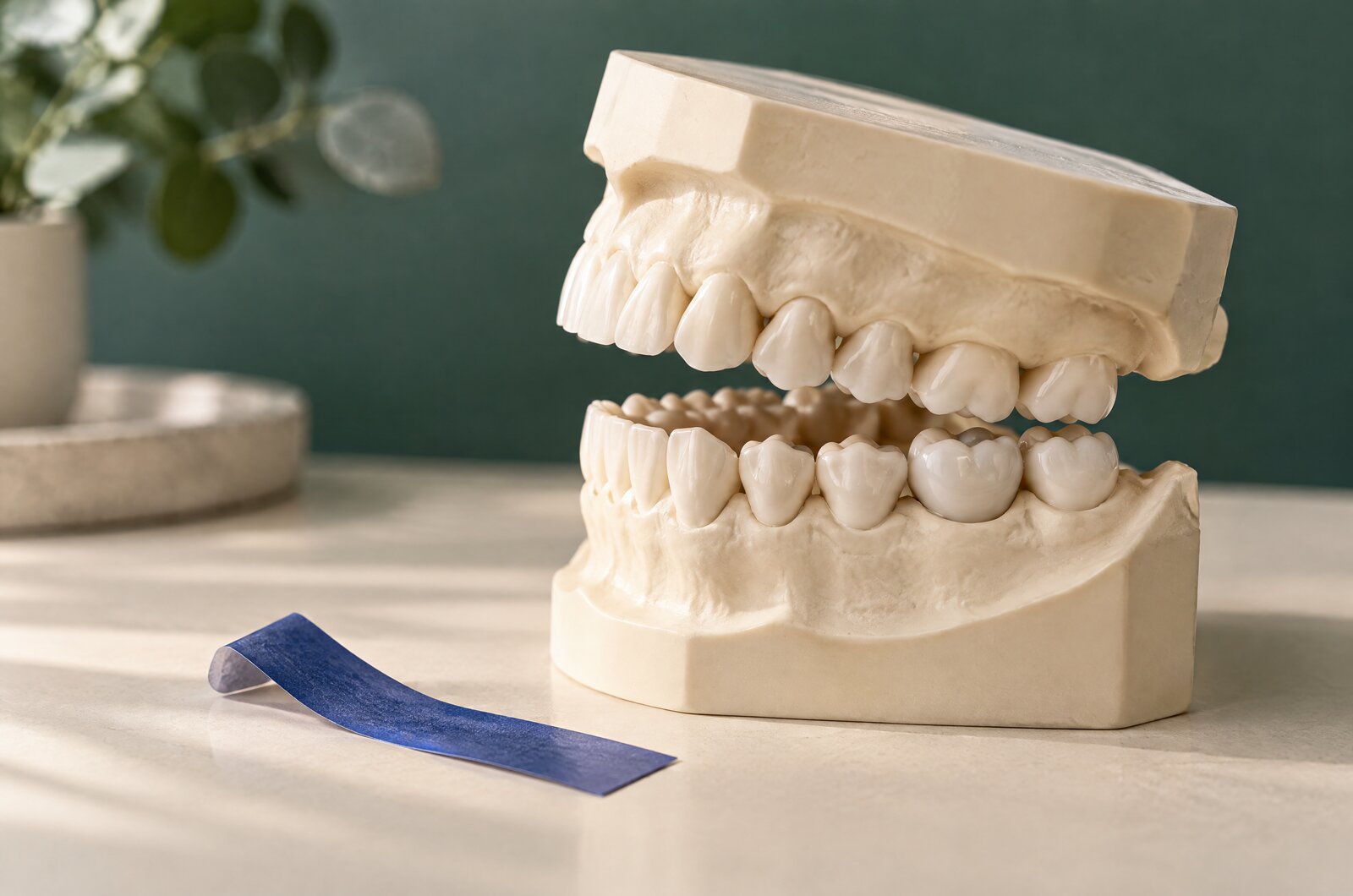
Top image: AI-generated illustration.
Summary of the Content
- A crown that feels high needs an assessment, not a home diagnosis.
- Tell the dentist whether the problem happens when you close your teeth, chew, or have something hot or cold.
- A bite check and a check of the tooth underneath answer different questions; pain does not establish that height is the cause.
- Do not try to reshape the crown yourself. Ask the clinic what to do until your appointment.
- Report swelling, severe pain, damage or looseness when you call, rather than requesting only a routine adjustment.
What does it mean when a crown feels high?
It means your bite feels different to you; a dentist needs to check whether the crown is interfering with the way your teeth meet. The clinic’s guide to fitting a dental crown explains that bite assessment looks for high spots or areas where the crown interferes with the bite. That is more useful than judging the crown’s height in a mirror.
Try describing the sensation rather than naming the fault. “That tooth seems to touch before the others” is different from “cold water makes it sensitive”. If you can describe what happens during an ordinary meal, tell the dentist. You don’t have to keep recreating the discomfort to provide a convincing explanation.
West Perth Dental Centre’s bite problem page discusses discomfort when teeth don’t meet properly. However, that general page also covers long-standing tooth and jaw alignment problems. A change noticed after one crown does not, by itself, establish that you need orthodontics or a wider change to your bite.
Is this sensitivity or pain when biting?
They are different descriptions, and it helps to report both if you have both. The clinic’s same-day crown information acknowledges that mild discomfort and sensitivity can follow treatment. Its toothache guidance also explains that tooth pain has different possible causes and needs assessment when it persists or is severe.
That distinction matters when you are deciding what to say on the phone. “Sensitive” can mean several things in everyday conversation. Does the discomfort happen only with a cold drink? Does it happen when food presses on the tooth? Does it continue when you are doing neither? Describe the pattern without deciding which explanation fits.
| What you notice | What to tell the clinic |
|---|---|
| The crowned tooth seems to touch first | Say when you first noticed the change and whether normal closing or chewing feels different. |
| Hot or cold food triggers discomfort | Describe the trigger and whether the discomfort stops or continues afterwards. |
| Pain occurs without eating | Explain when it happens, whether it interrupts sleep, and whether it is getting worse. |
| The crown moves, chips or comes off | Report the damage or movement explicitly so the clinic can assess the restoration, not just its bite. |
| There is swelling or severe pain | Report this at the start of the call and ask for urgent advice. |
This is a conversation guide, not a way to diagnose the problem. The clinic’s toothache and crown-maintenance pages support reporting pain, damage and looseness; the dentist still needs to examine your tooth.
Should I wait for the crown to settle?
Ask the clinic about your symptoms rather than choosing a waiting period from a general article. A description of temporary sensitivity is not a personal instruction to leave an uncomfortable bite unchecked. West Perth Dental Centre’s crown guide recommends consulting a dental professional if your bite function changes or you experience discomfort.
The Better Health Channel’s teeth and mouth care guidance, reviewed on 25 July 2025, states: “Always see your oral health professional if you have:” and includes mouth pain, facial swelling and a damaged tooth in that list. The practical point is to describe the change and let the clinic advise you about assessment.
When you call, mention swelling, severe or worsening pain, or a crown that is loose or broken. The clinic’s toothache page identifies severe pain, swelling and difficulty opening the mouth as reasons for prompt treatment. If you have a medical emergency, call 000, as directed by WA Health; do not wait for an online dental booking response.
What can the dentist check at the appointment?
The dentist can check the crown’s fit and how it meets your other teeth, then discuss what the findings mean. The clinic’s published crown-process guide describes the following elements of fitting and adjustment. Your follow-up may differ according to the problem.
- Look at how the crown sits. The dentist checks the restoration on the tooth. Tell them about any movement, roughness or other change you have noticed.
- Assess the bite. The clinic describes gently biting on marking paper to identify high spots or interference. Tell the dentist how that compares with the sensation during an ordinary meal.
- Consider an adjustment if indicated. Its guide describes small changes to the crown’s shape or contours where the examination finds a discrepancy. That does not mean every painful crowned tooth needs reshaping.
- Recheck and finish the surface. The guide describes checking the fit again and polishing after adjustments. Before leaving, ask what symptoms to report and how to arrange further advice.
A useful question is: “Have you found a bite contact that explains what I’m feeling, or does the tooth need another assessment?” It leaves room for an explanation beyond crown height. You can also ask the dentist to explain the proposed change before treatment, including its limitations and any alternatives relevant to your tooth.
Will I need the crown replaced?
Not every concern leads to a replacement. The clinic’s crown guide describes adjustment as one option and replacement when a crown is significantly worn or damaged. Its lost fillings and crowns page explains that examination helps determine whether an existing restoration can be refitted or needs replacing.
Those are possibilities, not a prediction about your tooth. Ask which finding supports the recommendation, whether the crown itself is affected, and whether the underlying tooth needs treatment. Before agreeing to additional work, ask for the proposed treatment and costs in writing. Don’t assume an adjustment is included in the original fee; ask the practice that provided the crown about its follow-up arrangements.
If your question is about choosing a crown before treatment, our same-day versus lab-made crown article covers that separate decision. The question here is what to do about a change after fitting, whichever method was used to make the crown.
What should I do before the appointment?
Follow the instructions given for your own crown and ask the clinic about anything that is unclear. A home attempt to file, sand or reshape it is not a substitute for the bite assessment and professional adjustment described in the clinic’s guide. If the crown comes off, contact the clinic for advice; its lost-crown information specifically warns against household glue.
You can prepare without trying to investigate the tooth yourself. Write down what you have already noticed, gather the fitting date, and keep any instructions or treatment summary you were given. If another practice fitted the crown, tell the team when you book so they can explain what information would be useful.
Use this checklist for the call and appointment:
- Which tooth or side feels different, and when was the crown fitted?
- Is it a temporary crown or the final crown, if you know?
- Does discomfort happen when closing, chewing, drinking, or without a trigger?
- Is there swelling, damage, movement or pain that is becoming worse?
- What instructions did the treating dentist give you?
- What medicines, medical conditions or allergies should you update the practice about?
- What will the assessment cost, and how will any further treatment be quoted?
Frequently Asked Questions
Does feeling high mean the crown was made incorrectly?
The feeling alone does not establish why it is happening. The clinic’s crown guide describes checking fit and bite and making adjustments where necessary. Ask the dentist to explain what they find rather than drawing a conclusion from appearance alone.
Can a temporary crown need checking too?
Yes. The clinic’s crown-process guide advises consulting a dental professional if a temporary crown is uncomfortable or your bite changes. Tell the team that it is temporary when arranging the visit.
What if the crown feels loose rather than high?
Report the looseness. The clinic’s crown-maintenance guide recommends contacting a dentist promptly for signs of damage or loosening. That calls for a restoration assessment, not an assumption that filing its surface will help.
Final Thoughts
You don’t need a technical explanation to ask for a crown check. “My new crown seems to touch first, and chewing feels uncomfortable” gives the team a clear starting point. West Perth Dental Centre is at 39 Colin Street, West Perth. Call 08 9321 6928 or use the clinic contact page. Bring your symptom notes, fitting details and current medicine information, and ask what the dentist needs to assess before any further treatment.
Written by Dr. Michael Wu, General Dentist, West Perth Dental Centre.
Sources
Checked 2 November 2026. General published guidance and the clinic’s published information, not a diagnosis or personal treatment plan.
- West Perth Dental Centre: crown process and bite assessment; crown maintenance; same-day crowns; toothache; lost fillings and crowns; bite problems; author profile; contact details.
- Victorian Government, Better Health Channel: Teeth and mouth care, reviewed 25 July 2025. Reference: www.betterhealth.vic.gov.au. Original explanation and one short attributed quotation, used under its Internet reproduction terms.
- WA Health: emergency contact information.
- Photos in this article are AI-generated illustrations, not photos of West Perth Dental Centre, its staff or patients.


 General Dentistry
 Cosmetic Dentistry
 Emergency Dentist
 Dental Implants
 Orthodontics
 Restorative Dentistry
 Trademarked Treatment
 Digital Dentistry